



Laboratory Research
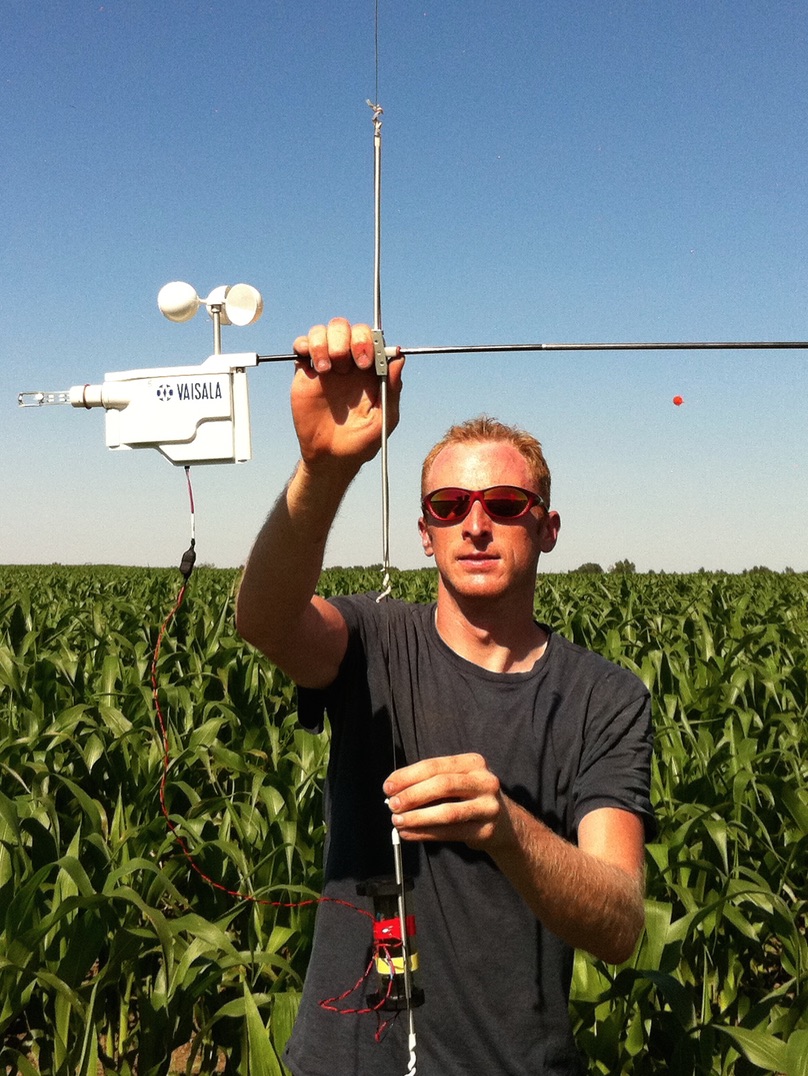
In order to isolate specific physical mechanisms relavent to environmental flows, it is often useful to utilize controlled laboratory experiments. In the EFD lab, a variety of environmental flows ranging from fundamental buoyancy driven flows such as katabatic and anabatic flows to flow around buildings are being studied.
Facilities:
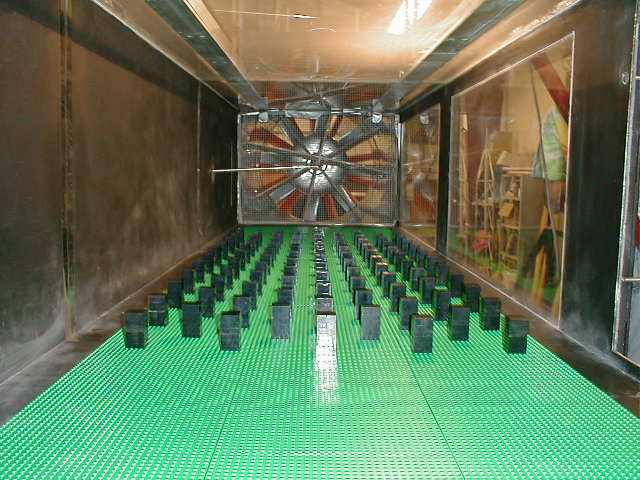
- Thermally stratified wind tunnel - the tunnel has a test section of approximately 50cm x 100 cm that is 2 meters long. Thermal stratifications of approximately 70 C can be obtained accross the height of the tunnel. Maximum speeds in this tunnel are approximately 12 m/s.
- High speed boundary layer tunnel (up to 50 m/s)
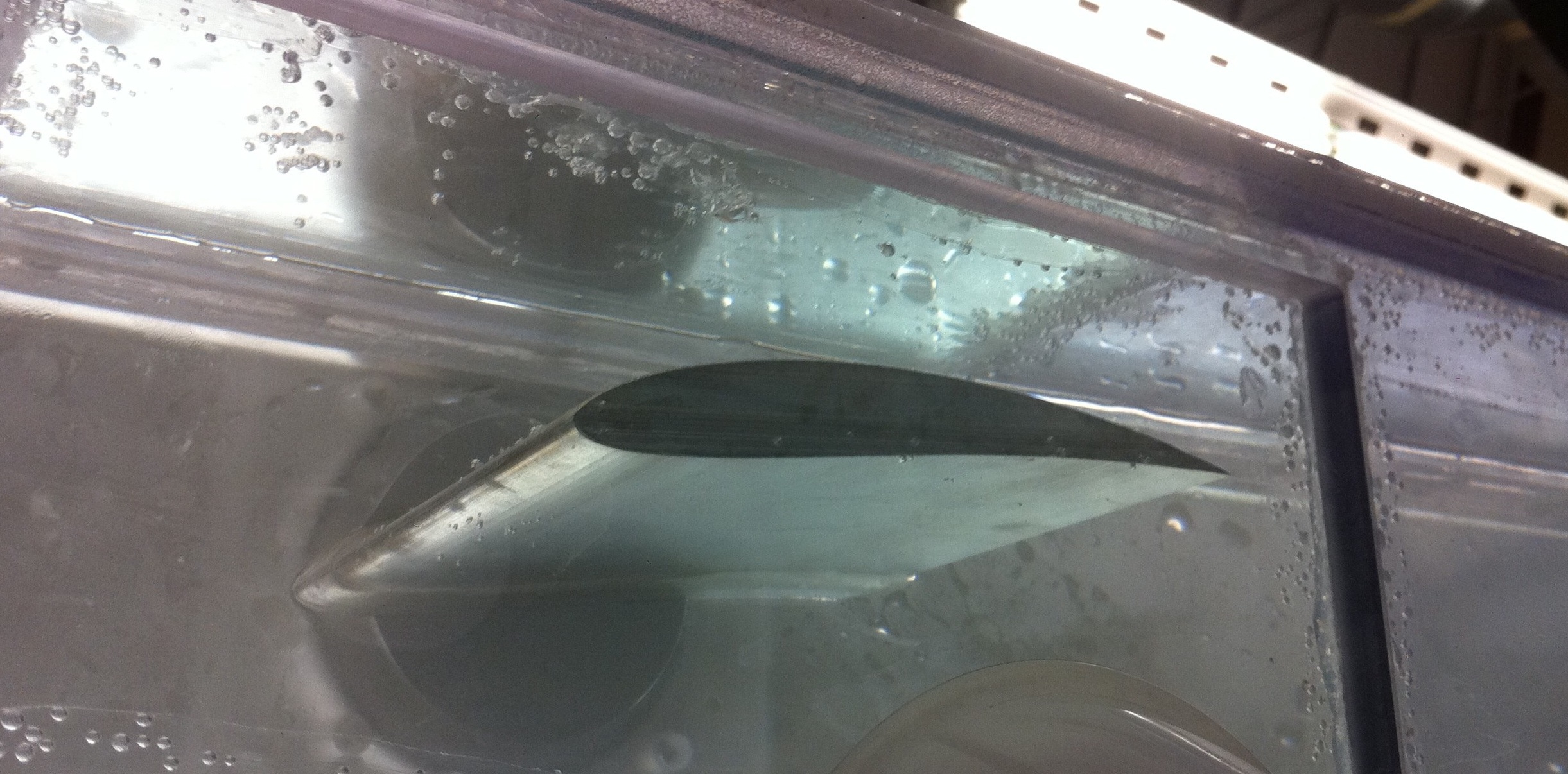
- Low speed water channel
Current Projects:
- Rotor Blade Vortex Control Using Surface Roughness - Chad Neilson - this project is funded by the Korean Institute of Geoscience and Mineral Resoures (KIGAM).
Past Projects:
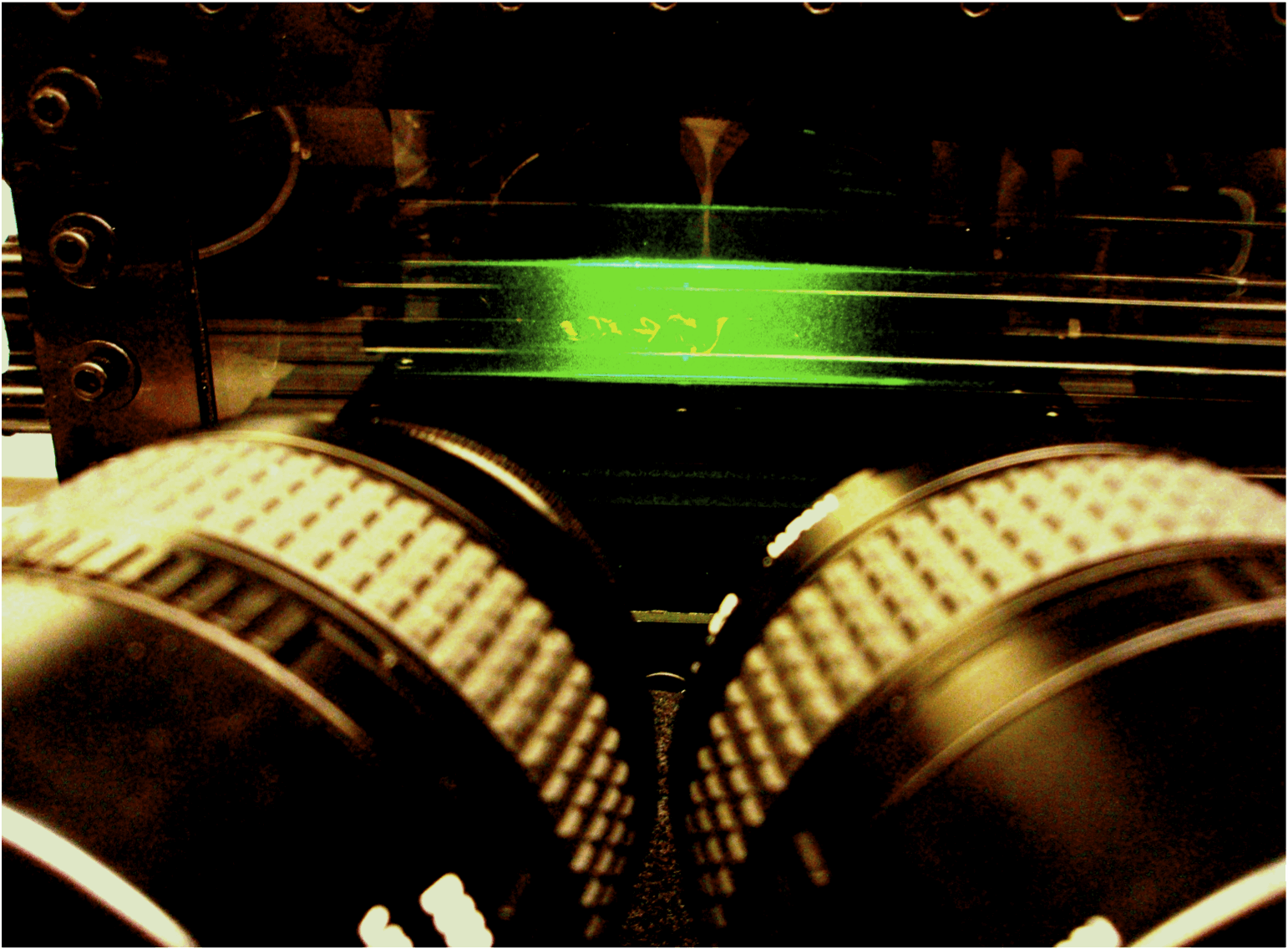
- Combined PIV/PLIF - Holly Oldroyd - this project was funded by Los Alamos National laboratory to use PIV and PLIF to better understand the various terms in the transport budget to improve modelling and predicting of accidental releases into pipe networks.
- PIV of flow around a sports stadium - Bhagirath Addepalli - this project was funded by Los Alamos National Lab to better understand how to aparameterize flow in and around complex geometries such as sports stadiums.