

Global Announcements

Spotlight

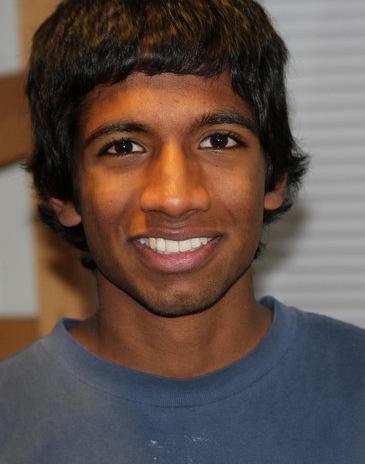
Bhagirath Addepalli

Bhagirath Addepalli

Hometown: Hyderabad, India

Program: PhD (Graduated May 2012)

Current Position: Microsoft Program Manager

Research Interests: Fundamental and applied research in fluid dynamics, inverse and optimization techniques, and statistical modeling and analysis of data. Specifically, interests include: laboratory experiments, computational fluid dynamics, Lagrangian random-walk modeling, development of novel case-specific objective functionals (metrics) for inverse problems, development of efficient and robust optimization and inversion techniques spanning deterministic, stochastic (frequentist), and Bayesian methods, multiple criteria decision making (MCDM - Pareto optimality), linear and nonlinear regression techniques for stochastic modeling, statistical modeling of time series data, model selection in inverse problems.

Publications:
A) Journal Publications / Pre-prints:
a) Addepalli, B., K. Sikorski, E.R. Pardyjak and M.S. Zhdanov. Source characterization of atmospheric releases using stochastic search and regularized gradient optimization. Inverse Problems in Science and Engineering, 2011. 19(8): p. 1097-1124.
b) Addepalli, B. and E.R. Pardyjak. A pseudo-metric to handle zero measurements and predictions in atmospheric inverse-source problems. Under review. Submitted to Inverse Problems in Science and Engineering.
c) Addepalli, B. and E.R. Pardyjak. Investigation of flow structure in step-up street canyons. Ready to be submitted to Boundary Layer Meteorology. Pre-print available upon request.
d) Addepalli, B. and E.R. Pardyjak. Study of flow fields in asymmetric step-down street canyons. Ready to be submitted to Boundary Layer Meteorology. Pre-print available upon request.
e) Addepalli, B., E.R. Pardyjak, P. Willemsen and D.E. Johnson. Urban form optimization for air quality applications using simulated annealing and genetic algorithms. Ready to be submitted to Atmospheric Environment. Pre-print available upon request.
f) Addepalli, B. Markov Chain Monte Carlo annealing for atmospheric inverse-source problems. To be submitted to Inverse Problems in Science and Engineering. Pre-print available upon request.

B) Peer-reviewed Conference Publications:
a) Addepalli, B., K. Sikorski, E.R. Pardyjak and M.S. Zhdanov. Quasi-Monte Carlo, Monte Carlo, and regularized gradient optimization methods for source characterization of atmospheric releases. in Dagstuhl Seminar Proceedings 09391, Algorithms and Complexity for Continuous Problems. 2009. Dagstuhl, Germany: Schloss Dagstuhl - Leibniz-Zentrum fuer Informatik, Germany.
b) Addepalli, B. and E.R. Pardyjak. Study of flow fields in asymmetric step-down street canyons. in The International Workshop on Physical Modelling of Flow and Dispersion Phenomena (PHYSMOD). 2007. University of Orleans, France.

C) Conference Publications:
a) Pardyjak, E.R., Addepalli, B., et al., Impact of green infrastructure on urban microclimate and air quality, in the 8th International Conference on Urban Climate - ICUC 8. 2012: Dublin, Ireland.
b) Addepalli, B. and C. Sikorski, A note on objective functions for atmospheric inverse-source problems, in second National Conference in Advancing Tools and Solutions for Nuclear Material Detection. 2011: Salt Lake City, UT.
c) Addepalli, B. and C. Sikorski, Efficient adaption of simulated annealing and genetic algorithms to atmospheric inverse-source problems, in AIChE Annual Meeting. 2010: Salt Lake City, UT.
d) Addepalli, B. and C. Sikorski, Tools to characterize the source of hazardous releases, in 1st National Conference on Advancing Tools and Solutions for Nuclear Material Detection. 2010: Salt Lake City, UT.
e) Addepalli, B., M.J. Brown, E.R. Pardyjak and I. Senocak. Evaluation of the QUIC-URB wind model using wind-tunnel data for step-up street canyons, in Seventh Symposium on the Urban Environment. 2007: San Diego, CA.
f) Addepalli, B. and E.R. Pardyjak. 2D PIV Measurements of street canyon flow for buildings with varying angles and separation distances. in American Meteorological Society Sixth Symposium on the Urban Environment. 2006: Atlanta, GA.

D) Conference Presentations:
a) Addepalli, B., E.R. Pardyjak, P. Willemsen and D.E. Johnson. GPU-MCDM: A new module of the Quick Urban and Industrial Complex (QUIC) dispersion modeling system for urban form optimization. in the 8th International Conference on Urban Climate - ICUC 8. 2012: Dublin, Ireland.
b) Addepalli, B., E.R. Pardyjak, P. Willemsen and D.E. Johnson. Development of a multiple criteria decision making (MCDM) tool for urban form optimization. in 92nd AMS Annual Meeting. 2012: New Orleans, LA.
c) Addepalli, B., E.R. Pardyjak, P. Willemsen and D.E. Johnson. Urban form optimization for air quality applications using simulated annealing and genetic algorithms. in Ninth Symposium on the Urban Environment. 2010: Keystone, CO.
d) Addepalli, B., M.J. Brown, E.R. Pardyjak and I. Senocak. Investigation of the flow structure around step-up, step-down, deep canyon, and isolated tall building configurations using wind-tunnel PIV measurements, in Seventh Symposium on the Urban Environment. 2007: San Diego, CA.
e) Addepalli, B., E.R. Pardyjak and M.J. Brown. The effect of geometry on the wake structure of a surface mounted obstacle. in 60th Annual Meeting of the APS Divison of Fluid Dynamics. 2007: Salt Lake City, UT.
f) Addepalli, B. and E.R. Pardyjak. Experimental investigation of the effect of Reynolds number and HΔ value on flow fields in street canyons with cubical Buildings. in American Physical Society, 59th Annual Meeting of the APS Division of Fluid Dynamics. 2006: Tampa Bay, FL.
g) Addepalli, B. and E.R. Pardyjak. 2D PIV measurements of flow between a pair of model buildings with varying geometries. in American Physical Society, 58th Annual Meeting of the Division of Fluid Dynamics. 2005: Chicago, IL.

E) Technical Reports:
a) Addepalli, B., C. Sikorski and E.R. Pardyjak. Source Characterization of atmospheric releases using quasi-random sampling and gradient optimization. Report submitted to the School of Computing, University of Utah. Report number: UUCS 09-001.
b) Nelson, M., B. Addepalli, D. Boswell and M.J. Brown. QUIC Start Guide (v 4.5). Los Alamos National Labratory. LA-UR-07-2799.

Contact: addbugs@gmail.com

ME 5810/6810 - Thermal Systems Design

Fall 2008

Class Information

Instructor: Eric Pardyjak
Office: Room 171 KEN
Phone: 585-6414
email: pardyjak@eng.utah.edu

Class Syllabus

Class Text: Design of Fluid Thermal Systems, 2nd Edition, W.S. Janna, PWS
Other Useful Texts:
Design of Thermal Systems, 3rd Ed, W.F. Stoecker, McGraw Hill
Analysis and Design of Energy Systems, 2nd Ed, B.K. Hodge, Prentice Hall
Final Exam: None; Final project only

Announcements

<9/25/2008> Homework 4 and Design Project 1 have been posted.
If you do not have the Janna textbook, you will need the following properties for problem 13:
viscosity of propylene glycol = 88x10^-5 lbf-s/f^2
SG propylene glycol = 0.968
density of water = 62.4 lblm/ft^2 (sea level).

Homework Solutions

Homework 5: 4.19d x = 1.45 m, 4.52 , 5.16: Visualize this problem using Figure 5.6a, use 1m of water head for a factor of safety (see page 260) NPSHa = 1.258m , z_s < 3.54m 5.17 17.3 HP delivered to the liquid
Homework 3: (49) Dh = 0.649 m, (52) Q= 0.076 ft^3/s or 0.113 ft^3/s, (61) for T = 100 C, Q = 0.0264 m^3/s, (62) epsilon ~ 0.0009 ft, (63) K~0.9

EES Examples

Piping Network Example: Two Loop example
Energy Equation: Janna Example 2.4
Pipe Flow Example: Janna 3.17
Optimum Economic Diameter Example: Janna Example 4.2
Critical Insulation Radius Example: Janna Example 6.5
Double Pipe Heat Exchanger Example: Janna Example 7.4
Solar Radiation Example: Solar Example

Class Calendar

Week Class Date Day Topic Reading Due Homework Due Handouts
1 1 08/26 T Introduction to Thermal Systems Design None None Syllabus
1 2 08/28 Th Fluid Mechanics Introduction Janna Ch.1, Ch.2 None Design Handout
2 3 09/02 T Fluid Mechanics Review Ch.2 None
2 4 09/04 Th Introduction to Piping Systems Ch. 3 Homework 1
3 5 09/09 T Piping Systems Lecture 2 Ch. 3
3 6 09/11 Th Economics Review Stoecker Handout Homework 2: 31, 33, 39, 40, 47 (me 6810 see handout)
4 7 09/16 T Optimum Economic Diameter Ch.4
4 8 09/18 Th Parallel Piping Systems 1
5 9 09/23 T Parallel Piping Systems 2 Ch. 4 Homework 3: 49, 52, 61, 62, 63 (6810 student do 37-39). see EES example from class
5 10 09/25 Th Flow Rate Measurement Ch 4.7
6 11 09/30 T Pumps and Piping Systems Ch. 5
6 12 10/02 Th NPSH and Dimensional Analysis Hodge Pipe Nework Handout Homework 4
7 13 10/07 T Pumps in Series and Parallel Pump Handout
7 14 10/09 Th Pardyjak in DC
7 10/10 Th Pardyjak in DC Design Project 1
8 10/14 T Fall Break No Classes
8 10/16 Th Fall Break No Classes
9 15 10/21 T Intro to Heat Transfer Fundamentals Ch. 6
9 16 10/23 Th Introduction to Heat Exchangers (LMTD) Ch. 7 EES Critical Radius Example
10 17 10/28 T Double Pipe Heat Exchangers Ch. 7 Homework 5: 4.19,4.52,5.16,5.17
10 18 10/30 Th Effectiveness-NTU EES Double Pipe HX example
11 19 11/04 T Orifice Flow meter in Class Lab
11 20 11/06 Th Intro to Shell and Tube Heat Exchangers Ch.8
12 21 11/11 T Visiting Lecture from Tim Dugan of Compression Engineering Corp.
12 22 11/13 Th Final Design Project Team Meetings
13 23 11/18 T Shell and Tube Heat Exchangers Ch. 8 Design Project 2
13 24 11/20 Th Plate and Frame Heat Exchangers Ch 9.1-9.2
14 25 11/25 T Cross Flow Heat Exchangers Ch. 9
14 11/27 Th Thanksgiving Holiday No Classes
15 26 12/02 T Review of Radiation Heat Transfer McQuiston Handout
15 27 12/04 Th Introduction to Solar Radiation McQuisition Handout EES Solar Radiation Handout
16 28 12/09 T Heat Gain Through Fenestrations Homework 6: Ch 7: 29, Ch. 8: 3, 13
16 29 12/11 Th Solar Flat-Plate Heat Exchangers Duffie and Beckman Handout
17 12/17 Wed Final Design Project Reports Due Final Design Project